Bike Patrol Security in Orlando
Bike patrol security in Orlando solves a problem that neither a parked officer nor a patrol vehicle handles well: covering a large property with pedestrian spaces, quickly, quietly and in a way residents and visitors will actually approach.
The Middle Ground Between Foot and Vehicle
Every patrol method trades something away. An officer on foot notices detail but covers very little ground, so a large community gets one lap an hour if you are lucky. A patrol vehicle covers ground easily but stays on the roadways and lots, misses everything happening between buildings, and announces its arrival long before it gets there. Neither is wrong. Both leave gaps.
A bike sits between them and keeps most of the advantages of each. The officer moves several times faster than walking pace, still hears conversations and doors, can stop instantly beside something that looks off, and reaches breezeways, courtyards and paths that no vehicle will ever enter. The International Police Mountain Bike Association has advocated bike patrol for decades on exactly this basis: more coverage than foot patrol, more contact and awareness than a vehicle.
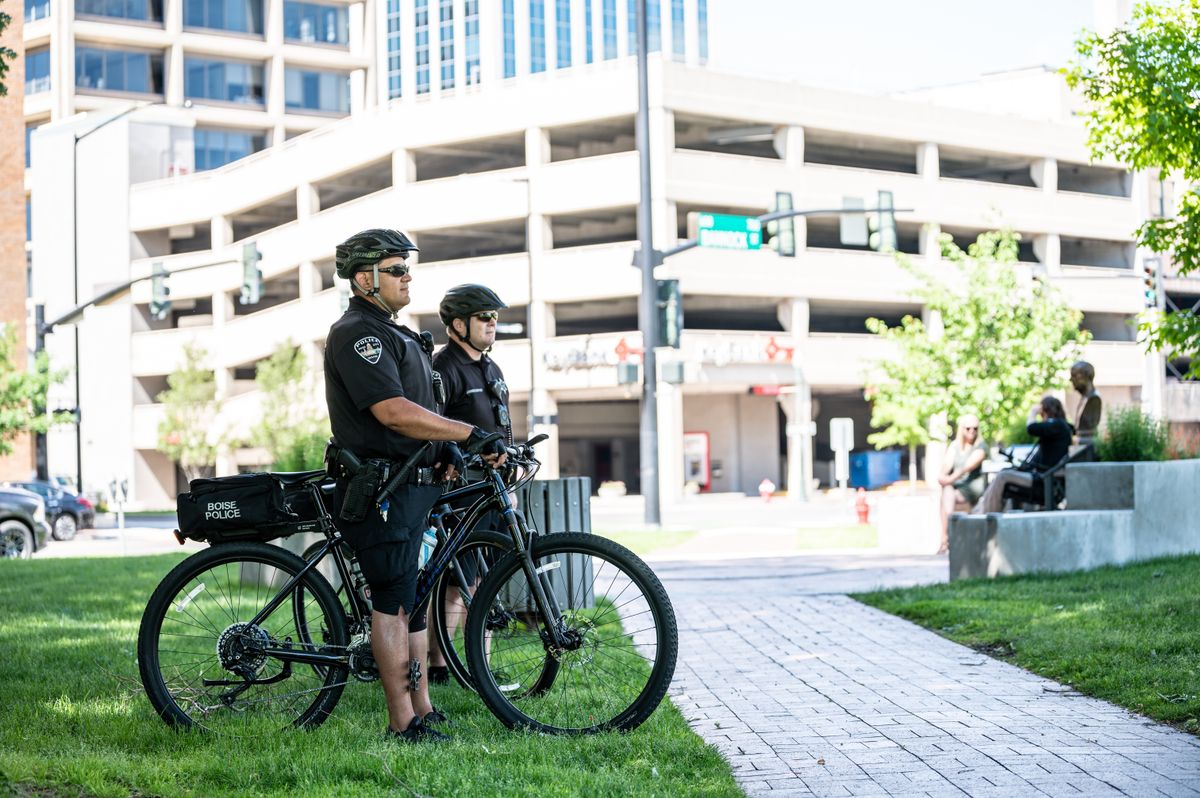
What Our Bike Patrol Service Includes
- Class D licensed officers in marked patrol uniform. High visibility presentation so residents, staff and visitors can identify an officer instantly.
- Purpose equipped patrol bikes. Lighting front and rear, radio, flashlight and reporting equipment carried on the officer rather than left in a vehicle.
- Mapped patrol routes with randomized timing. Every building, lot, amenity area and dark corner appears in the route, but never in a pattern someone can time.
- Interior and exterior coverage. Stairwells, breezeways, laundry rooms, mail areas, pool decks, trash enclosures and parking structure levels.
- Time stamped patrol reports. What was checked, when, what was found and what was escalated.
- Heat and weather protocols in the post orders. Riding intervals, hydration breaks and a defined fallback to vehicle or fixed post when storms move in.
- Resident and staff contact. Officers stop and talk. On residential and campus sites that visibility is a large part of what you are paying for.
- Escalation to armed or vehicle coverage. Available where a site needs it, on the same contract.
Signs Your Orlando Property Is a Fit for Bike Patrol
- You manage multiple buildings connected by walkways rather than a single structure
- Incidents keep happening in places a patrol car cannot reach, such as courtyards, pool areas or breezeways
- Car break-ins and catalytic converter theft are occurring in spread out surface lots
- Your current officer spends most of the shift in one place because walking the property takes too long
- Residents or tenants say they never see security, even though you are paying for coverage
- A parking structure needs level by level checks that a vehicle handles slowly and noisily
- You are running an outdoor event where crowds block vehicle movement
- Loitering, vandalism or after hours amenity use is concentrated in pedestrian areas
Our Process
-
Ride the Property
We walk and ride your site before quoting, timing a realistic lap and identifying the places where incidents actually occur rather than where a map suggests they might. Lighting gaps and blind corners get noted on this pass.
-
Build the Route and the Post Orders
We document the checkpoints, the sequence options, the escalation contacts and the weather fallback. Multiple route options exist so the timing varies without any part of the property being skipped.
-
Assign Officers Suited to the Work
Bike patrol is physical work in a hot climate. We assign officers who can sustain it across a full shift and who are comfortable with the resident contact that comes with residential and campus posts.
-
Deploy and Report
Patrols begin, time stamped reports start arriving on your schedule, and anything significant reaches your point of contact immediately rather than in a weekly roll up.
-
Review the Pattern and Adjust
After the first few weeks we compare where incidents are landing against where patrol time is being spent, then reweight the route. Coverage that never changes stops matching the property.
Bike, Vehicle or Foot: How They Compare
| Factor | Bike Patrol | Vehicle Patrol | Foot Patrol |
|---|---|---|---|
| Ground covered per hour | High | Highest on roads only | Low |
| Reaches breezeways and courtyards | Yes | No | Yes |
| Approach noise | Very quiet | Audible well in advance | Quiet |
| Visibility to residents | High and approachable | Moderate | High but limited in range |
| Performance in heavy rain | Paused, falls back to vehicle or post | Unaffected | Limited |
| Best for | Multi building sites, campuses, outdoor events | Multiple separate properties, long roadways | Single building, fixed entry control |
| Relative hourly cost | Comparable to standard officer post | Higher, includes vehicle | Lowest |
What Drives the Cost of Bike Patrol in Orlando
- Hours and shift pattern. Continuous nightly coverage prices better per hour than a few scattered shifts.
- Property size and checkpoint count. More buildings and amenity areas mean a longer lap and sometimes a second officer.
- Time of day. Overnight, weekend and holiday coverage carries a premium, and summer daytime riding requires shorter intervals with built in breaks.
- Armed or unarmed. Class G armed coverage costs more per hour than a Class D unarmed post.
- Reporting requirements. Detailed checkpoint documentation for an HOA board or a management company adds administrative time.
- Contract length. Ongoing residential and campus programs are priced better than short term or single event coverage.
Why Bike Patrol Suits Orlando Properties
The Orlando metro has grown around large garden style apartment communities and mixed use developments, the kind with several three story buildings, exterior stairwells, breezeways, a clubhouse and pool, and surface parking wrapped around the edges. That layout is close to the worst case for vehicle patrol, because most of the property is pedestrian space a car cannot enter, and the vehicle is heard from two buildings away when it can. It is also punishing for foot patrol, since a single lap can take most of an hour. A bike fits the geometry almost perfectly. Central Florida's climate is the real constraint, not the terrain: summer heat and humidity make sustained riding genuinely demanding, and the afternoon storm pattern plus a hurricane season running roughly June through November means weather contingencies belong in the post orders rather than in a phone call at the moment it starts raining. Our answer is to weight bike coverage toward evening and overnight hours when most residential incidents occur anyway, build in break intervals, and define in advance what coverage looks like when riding has to stop.
Why Choose Our Orlando Bike Patrol
Routes Built From a Real Site Ride
We ride your property before we quote it, timing an actual lap and marking the corners, stairwells and lot sections where incidents are landing. Fifteen years in protective services has taught us that a route drawn from a satellite image misses the lighting gap behind building four every time. Your post orders name specific checkpoints, not a general instruction to patrol the grounds.
Heat and Storm Planning Written In
Bike patrol in Central Florida fails when it is scheduled as though the weather does not exist. Riding intervals, hydration breaks and a defined fallback to vehicle or fixed post during lightning are written into the post orders before the first shift. Hurricane season runs roughly June through November here, and our dispatch line is staffed 24 hours a day to reassign coverage when conditions change.
Licensed, Verified and Supervised
Every officer holds the Florida Class D license with its 40 hours of state mandated training, and our agency license B 1900066 is publicly verifiable under Chapter 493 of the Florida Statutes. Field supervisors run spot checks against the checkpoint log, so you can confirm the patrol is being ridden rather than parked. Leadership brings 14 years of sworn law enforcement experience to that oversight.
What Clients Say
The officers were very professional and provided weekly reports of duties.Jacques LaFrance Jr.Verified client
Their customer service and attention to detail is second to none.Phil KennedyVerified client
Great company! They are very professional. They do great work and are affordable.J. DiazVerified client
An excellent company and one that you can trust.Robert FelixVerified client
Bike Patrol Security FAQs
Why use bike patrol instead of a patrol vehicle?
A bike goes where a vehicle cannot: breezeways, courtyards, pool decks, stairwell landings, pedestrian paths and the upper levels of parking structures. It also approaches quietly, so an officer arrives at an incident before the sound of an engine announces them. The International Police Mountain Bike Association has long promoted bike patrol for exactly this combination of ground coverage and approachability. For a large property with interior pedestrian space, a bike sees far more per hour than a car.
Are your bike patrol officers licensed?
Yes. Every bike patrol officer holds the Florida Class D security officer license, which requires 40 hours of state mandated training through the Department of Agriculture and Consumer Services. Our agency operates under license B 1900066 under Chapter 493 of the Florida Statutes. Where an assignment calls for armed coverage, the officer additionally holds the Class G firearm license with its 28 hours of firearms instruction and annual requalification.
How does Florida heat affect bike patrol shifts?
It affects them significantly, and we plan around it rather than pretending otherwise. Central Florida summer afternoons combine high heat with high humidity, so we schedule shorter riding intervals with fixed post or interior breaks, require hydration on the officer, and shift the heaviest riding toward evening and overnight hours. An officer riding beyond safe limits stops noticing things, which defeats the purpose of the patrol.
What happens during storms and hurricane season?
Florida's hurricane season runs roughly from June through November, and Central Florida sees frequent afternoon thunderstorms through the summer regardless of tropical activity. Bike patrol pauses during lightning and heavy wind, and coverage continues from a vehicle or a fixed interior post until conditions clear. That contingency is written into the post orders before the first shift so nobody is improvising during a storm.
What size property justifies bike patrol?
The trigger is layout more than acreage. If your site has multiple buildings, interior walkways, surface lots spread across a large footprint, a pool and clubhouse area or a parking structure, a bike covers it in a fraction of the time an officer on foot needs. A single compact building with one entrance does not need a bike, and we will say so rather than sell you the upgrade.
Can bike patrol cover an outdoor event?
Yes, and it is one of the strongest uses for it. At festivals, races, park events and outdoor markets, bike officers move through crowds and along perimeters that vehicles cannot enter, reach a reported incident quickly from anywhere on the site, and are easy for attendees to spot and approach. We usually pair bike officers with fixed entry posts rather than using bikes alone.
Request Bike Patrol Coverage
Tell us about the property layout and where incidents are happening. We respond within 2 business hours with a route concept, staffing recommendation and cost.
Prefer to talk it through now?
(407) 863-8338Get a Free Quote
Four fields. No obligation.
Related Security Services
Bike patrol often runs alongside these options on the same property.
Mobile Patrol & Alarm Response
Marked vehicle patrols and after hours alarm response for sites that do not need a full time post.
View service →Unarmed Security Guards
Class D licensed officers for access control, gatehouse coverage and steady on site presence.
View service →Event Security
Crowd management and staffing plans for outdoor events, festivals and private functions in Orlando.
View service →Read more about our team and licensing, or contact us to schedule a walk of your property.
Our Orlando Office
Bike patrol coverage is dispatched from our office at 3203 Lawton Rd, Orlando, FL 32803. We staff posts across Orlando, Winter Park, Kissimmee, Sanford, Lake Nona and the surrounding Central Florida area.
Ready to Secure Your Property?
Call now for a straight answer on whether bike patrol fits your Orlando property. No pressure, no long term contract required.